
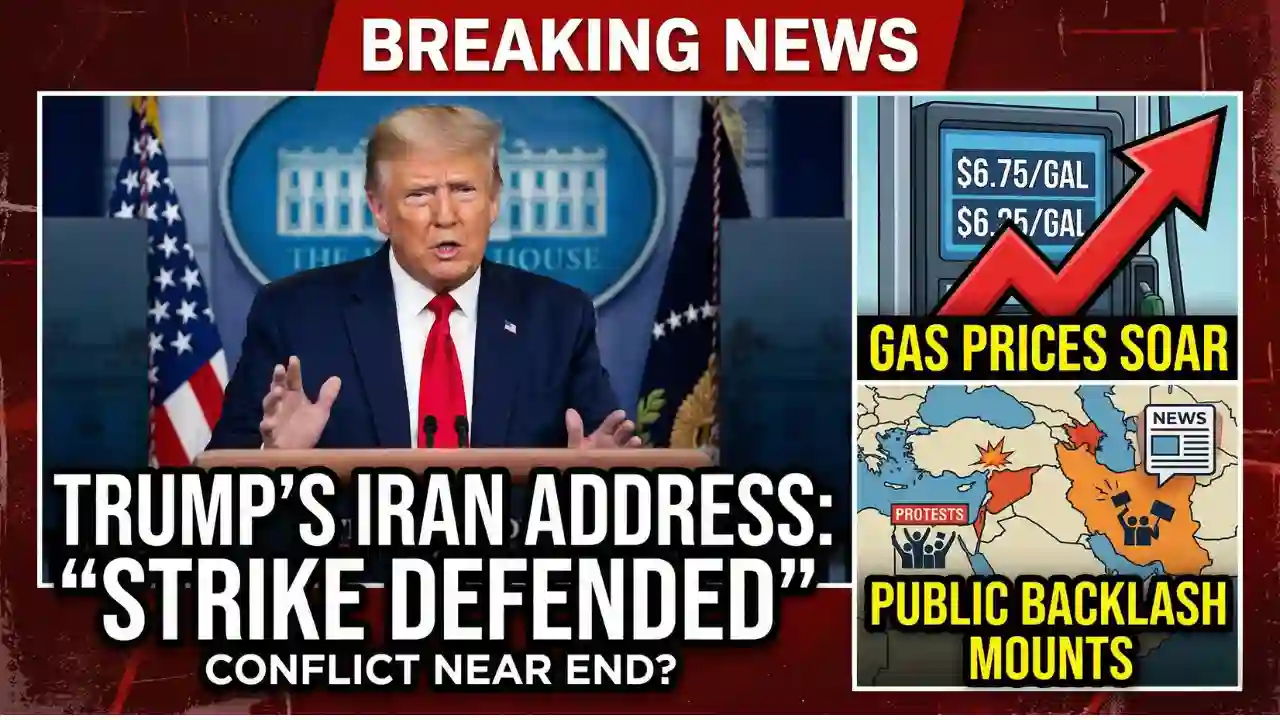
Trump’s Iran War Address : In a high-stakes prime-time speech from the White House on April 1, 2026, President Donald Trump stood firm on his decision to launch military action against Iran. He told the American people that the month-long conflict is “nearing completion,” even as economic pressures mount and voter frustration grows. This marked Trump’s first national address since U.S. and Israeli forces began the operation over a month ago, and it came at a critical moment when many families are feeling the pinch at the pump.
The president’s remarks aimed to reassure a weary nation while doubling down on the strategy that has reshaped the Middle East. With oil markets in turmoil and political opponents sharpening their criticism, Trump framed the operation as a necessary success that is now winding down—though he warned of intensified strikes in the weeks ahead.
Why Trump Launched the Iran Operation—and What He Said Last Night
Just over a month ago, the U.S. and Israel carried out a surprise attack on Iranian targets, citing threats from Tehran’s missile programs, proxy militias, and nuclear ambitions. Trump has repeatedly described the move as a bold step to prevent a larger catastrophe, including potential nuclear escalation that could have engulfed multiple countries.
In Wednesday night’s 19-minute address, the president struck a confident tone. He declared that America’s “core strategic objectives” in the region are nearly met, pointing to the destruction of Iran’s navy, air force capabilities, communication networks, and missile production facilities. “We’re going to hit them extremely hard over the next two to three weeks,” he said, “but we will finish the job soon and bring stability back.”
Trump avoided setting a firm end date but emphasized that U.S. forces are “very far ahead of schedule.” He portrayed the campaign—known in military circles by operations like Epic Fury and Roaring Lion—as an overwhelming triumph, arguing that Iran no longer poses the same level of threat to the region or global energy supplies.
The Human and Economic Cost: Gas Prices Spike as Support Slips
While the White House celebrates military gains, the home front tells a different story. Gas prices have surged nationwide since the conflict began, squeezing household budgets and fueling inflation concerns. Analysts link the spike directly to disruptions in the Strait of Hormuz and attacks on oil infrastructure across the Gulf.
Public opinion polls reflect growing unease. Many Americans who initially backed a strong response to Iranian aggression now question the open-ended nature of the engagement and its daily impact on their wallets. Trump acknowledged these challenges in his speech, urging viewers to “keep this conflict in perspective” and reminding them of the long-term security benefits.
The address also served as a subtle pushback against critics in Congress and the media who have called the war unpopular and costly. By framing it as nearly complete, Trump is attempting to shift the narrative from endless conflict to decisive victory.
What This Means for the Future of U.S. Policy in the Middle East
Trump’s speech offered no major new policy announcements but reinforced a clear message: the U.S. will not walk away until the job is done. He highlighted the dismantling of Iran’s ability to support destabilizing proxies and reaffirmed the goal of preventing Tehran from developing nuclear weapons.
For everyday Americans, the key questions remain: How soon will troops come home? When will fuel prices stabilize? And what does “nearing completion” actually look like on the ground?
Analysts note that while Iran’s conventional military power has been severely degraded, ongoing incidents—like recent missile fire targeting Gulf states and Israel—show the conflict is not yet fully extinguished. Trump signaled that aggressive action will continue in the short term to neutralize remaining threats.
A Defining Moment for Trump’s Second Term
This address arrives as President Trump navigates one of the biggest foreign policy tests of his second term. Supporters see it as proof of strong leadership and decisive action that previous administrations avoided. Critics argue it has unnecessarily strained alliances, inflated energy costs, and diverted attention from domestic priorities.
Whatever your view, one thing is clear: the coming weeks will determine whether Trump’s prediction of a swift conclusion holds true or if the conflict drags on longer than expected.
As the dust settles in the Middle East, Americans will be watching closely for signs of de-escalation—and relief at the gas pump. The White House insists the end is in sight. For now, the president has asked the country to stay the course while U.S. forces work to deliver what he calls a lasting victory for peace and security.
What do you think—has Trump made the right call on Iran? Share your thoughts in the comments below. For more analysis on U.S. foreign policy, Middle East developments, and economic impacts, stay tuned to this blog for ongoing updates.