
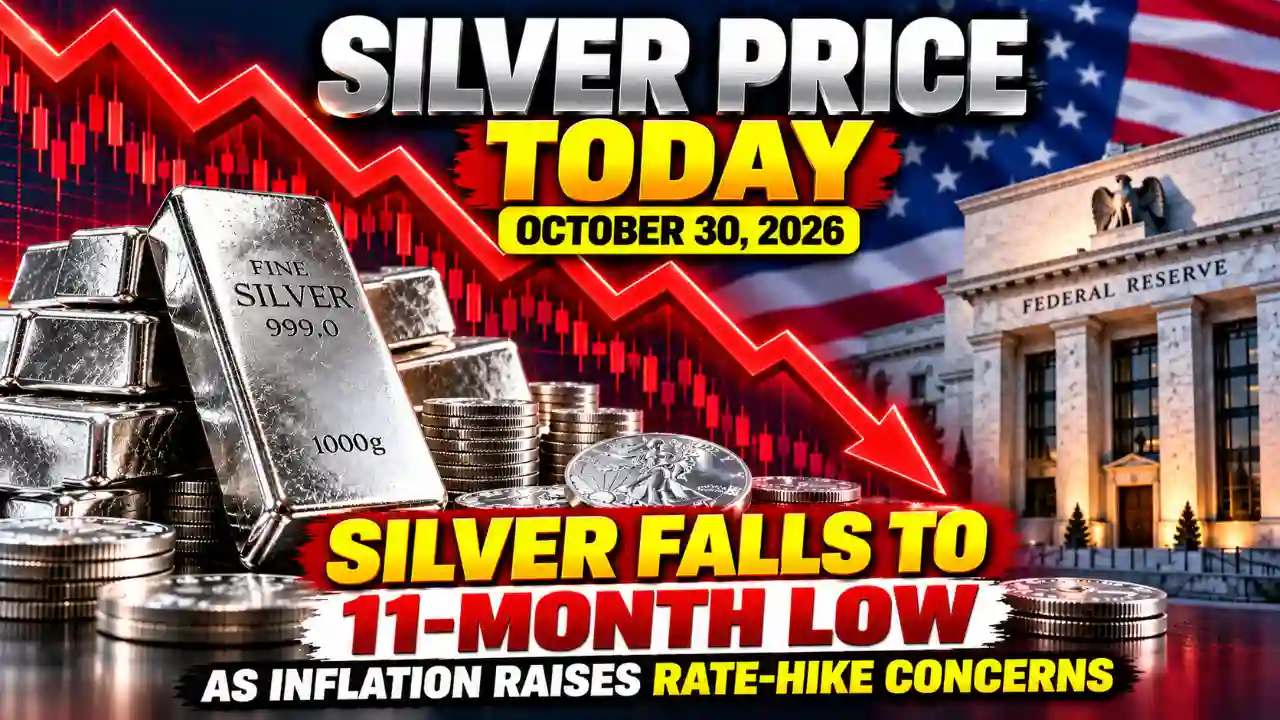
Silver Price Today Silver prices came under heavy pressure on Friday, October 30, as fresh U.S. economic data strengthened expectations that the Federal Reserve could keep interest rates higher for longer.
Silver futures opened around $52.25 per ounce, but the metal quickly extended its decline during early trading, falling to about $50.55 per ounce. The move pushed silver toward its lowest level in roughly 11 months.
The decline follows a sharp selloff across precious metals. Silver had already fallen about 2% on Thursday, settling near $52.19 per ounce, before selling intensified on Friday.
Why Is Silver Falling Today?
One of the biggest factors weighing on silver is the latest U.S. inflation data.
The Personal Consumption Expenditures (PCE) price index increased 0.5% in September, its largest monthly increase since March. Annual inflation also accelerated, adding to concerns that price pressures remain too strong for the Federal Reserve to quickly ease monetary policy.
At the same time, the U.S. economy continues to show resilience. Gross domestic product expanded at a 3.4% annualized rate in the third quarter, stronger than many economists had expected.
The combination of firm economic growth and persistent inflation has increased expectations that the Federal Reserve could raise interest rates again later this year.
Higher Interest Rates Put Pressure on Silver
Silver does not generate interest or dividends. As a result, higher Treasury yields and expectations for higher interest rates can make non-yielding assets such as silver and gold less attractive to investors.
The Federal Reserve kept interest rates unchanged at its latest meeting, but markets are increasingly focused on the possibility of another rate increase in December.
Rising energy prices are also complicating the inflation outlook. Higher oil prices could keep inflation elevated and make it harder for the Fed to shift toward easier monetary policy.
Silver Faces Additional Pressure From Industrial Demand
Unlike gold, silver has a significant industrial component. It is widely used in electronics, solar technology and other manufacturing applications.
That means concerns about global economic growth can have a greater impact on silver.
Recent weakness in technology stocks and uncertainty surrounding the sustainability of massive AI-related investment have added another layer of pressure to industrial metals, according to market analysts.
Silver had also attracted substantial speculative buying during its earlier rally. As prices moved lower, technical selling and liquidation of bullish positions appear to have accelerated the decline.
Silver Price in the U.S. and India
Global silver prices fell toward the $50-per-ounce area on Friday.
In India, the decline was also visible in the domestic market. Silver prices in Delhi dropped by ₹8,300 to ₹1,90,200 per kilogram on October 30, according to the All India Sarafa Association.
MCX silver futures were also under pressure, trading around ₹1.86 lakh per kilogram during Friday’s session.
What Could Happen Next?
The direction of silver prices could largely depend on upcoming U.S. inflation data, Federal Reserve policy expectations, Treasury yields and the strength of the U.S. economy.
If inflation remains elevated and markets increasingly price in another Fed rate hike, silver could remain under pressure.
On the other hand, a slowdown in inflation, falling bond yields or renewed expectations for rate cuts could provide support to precious metals.
For now, silver remains in a volatile phase after its sharp correction from this year’s highs.
Bottom line: Silver’s latest decline is being driven by a combination of persistent inflation, strong U.S. economic growth, higher-rate expectations and concerns about industrial demand. Investors will be watching the Federal Reserve and upcoming economic data closely for clues about where silver goes next.