
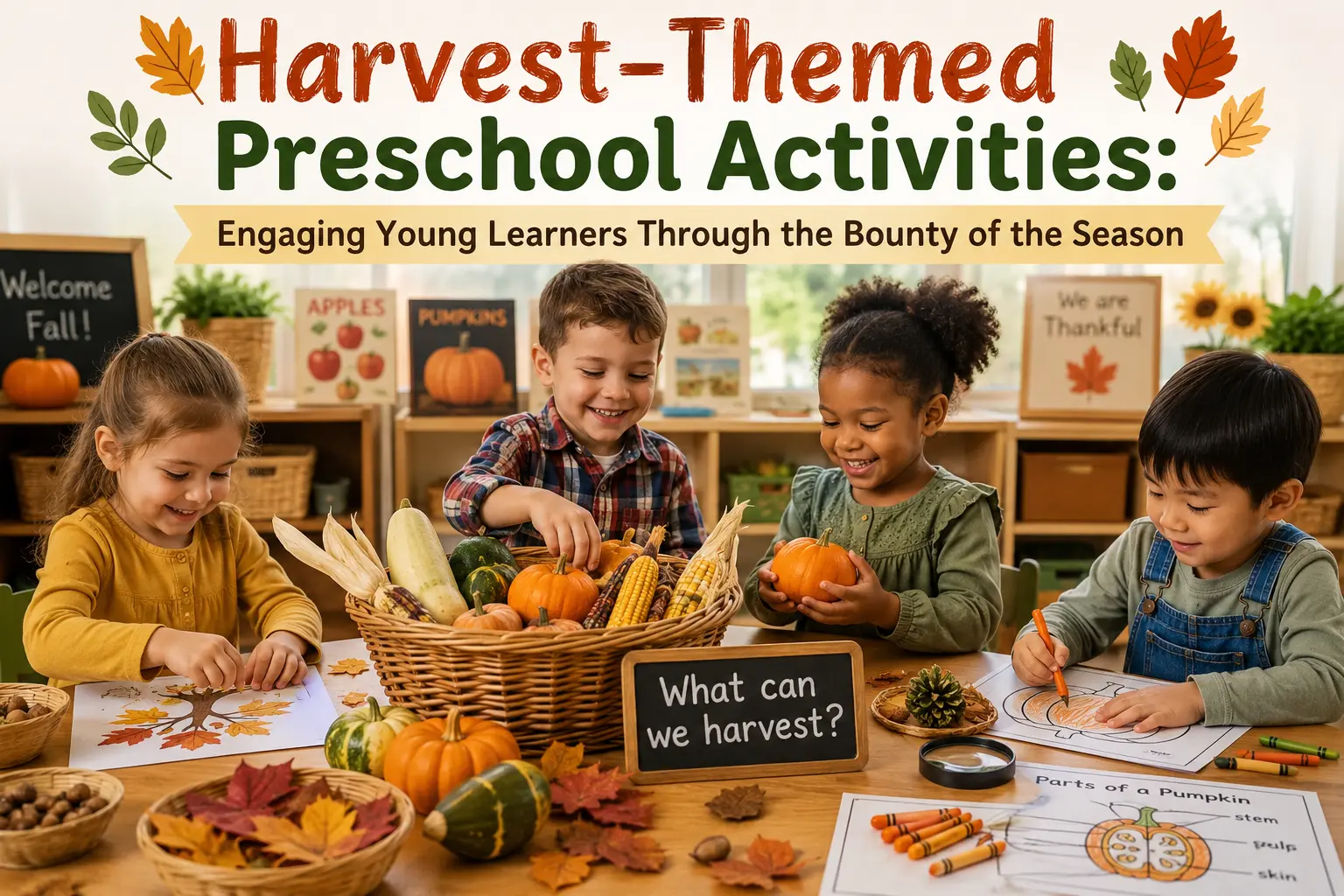
Harvest season brings a rich tapestry of colors, textures, flavors, and stories from the farm to the classroom. For preschoolers aged 3 to 5, this time of year offers a perfect opportunity to explore themes of growth, gratitude, community, and the natural world. Harvest-themed activities blend fun with foundational learning in sensory exploration, fine and gross motor skills, early math and literacy, science concepts, and social-emotional development. These hands-on experiences help children understand where food comes from, appreciate the efforts of farmers, and celebrate abundance in a tangible way.
This comprehensive guide presents the best harvest-themed preschool activities, organized by learning domain. Whether you’re a teacher planning a fall unit, a parent enriching home learning, or a caregiver seeking seasonal engagement, these ideas are designed to be adaptable, low-cost, and developmentally appropriate. With over a dozen detailed activities, extensions, book recommendations, and implementation tips, you’ll have everything needed to create a memorable harvest curriculum.
Why Harvest Themes Matter for Preschoolers
Harvest themes connect children to nature’s cycles. Pumpkins, apples, corn, squash, and colorful leaves become tools for discovery. Activities foster:
- Curiosity and Science Skills: Understanding plant life cycles, seasons, and weather.
- Gratitude and Social Skills: Learning about sharing, community helpers (farmers), and thankfulness.
- Sensory and Motor Development: Engaging multiple senses builds neural pathways.
- Early Academic Foundations: Counting, sorting, patterns, letter recognition, and vocabulary.
- Emotional Growth: Celebrating effort and outcomes builds resilience and joy.
Research and early childhood best practices show that thematic, play-based learning increases engagement and retention. Harvest activities are especially effective because they use real, seasonal items that spark wonder.
Sensory Play: Exploring Textures and the Harvest
Sensory bins are a preschool staple and perfect for harvest themes.
Harvest Sensory Bin: Fill a large container with dried corn kernels, colorful fall leaves (real or fabric), mini pumpkins or gourds, acorns, and hay or shredded paper. Add scoops, funnels, tweezers, and small baskets. Children practice scooping, pouring, and sorting while discussing textures—smooth pumpkins vs. rough corn cobs. For safety, supervise closely and avoid small loose parts for very young toddlers.
Apple Cider Sensory Play: Use safe, scented apple-scented playdough or a water table with apple slices, cinnamon sticks, and floating apple cutouts. Add measuring cups for pretend “cider making.”
Corn Cob Painting: Roll ears of corn (dried or fresh) in paint and use as stamps or rollers on large paper. This creates beautiful patterns while developing grip strength.
Extensions: Hide laminated picture cards of harvest items for a search-and-find game. Discuss smells by adding safe spices like cinnamon or cloves in sealed pouches.
Arts and Crafts: Creative Expressions of Abundance
Handprint Harvest Tree or Wreath: Children make handprints in fall colors (red, orange, yellow, brown) on paper to form leaves on a tree trunk or a circular wreath. Add real leaves or buttons for texture. Label with “Thankful for…” statements to build vocabulary and emotional awareness.
Pumpkin Collage or Painting: Provide orange paper, paint, glitter, and various materials (yarn for vines, green construction paper for stems). Children create jack-o’-lantern faces or realistic pumpkins. For a group project, make a giant classroom pumpkin.
Scarecrow Craft: Use paper plates, construction paper, raffia for hair, and old fabric scraps. Children dress their scarecrow and describe what it protects (crops). This ties into farm life discussions.
Vegetable Printing: Cut potatoes, apples, or bell peppers into shapes. Dip in paint and stamp onto banners or cards. Perfect for making “Harvest Festival” invitations.
Leaf Rubbings and Nature Art: Collect safe leaves outdoors. Place under paper and rub with crayons. Combine into a collective mural.
Fine Motor Focus: Use child-safe scissors to cut along lines on pumpkin shapes or lace yarn through punched holes in apple cutouts.
Math Activities: Counting the Bounty
Harvest provides endless manipulatives for early math.
Pumpkin Seed Counting: After cleaning a real pumpkin, dry the seeds and use them for counting, sorting by size, or one-to-one correspondence. Create number mats where children place the correct number of seeds on each pumpkin.
Apple Sorting and Patterning: Use red, green, and yellow pom-poms or apple cutouts. Sort by color or size. Create ABAB patterns with apple, leaf, apple, leaf.
Harvest Graphing: Poll the class on favorite harvest foods (apples vs. pumpkins) and create a simple picture graph. Discuss more/less.
Measurement with Gourds: Compare weights and sizes of different squash using balance scales or non-standard units like blocks.
Number Hunt in Sensory Bin: Hide numbered harvest cards in the bin for children to find and order.
These activities build number sense, classification, and basic data skills through playful repetition.
Literacy and Language: Stories from the Farm
Harvest Vocabulary Building: Introduce words like harvest, farmer, tractor, plow, ripe, basket, and abundance. Use picture cards, songs (“Farmer in the Dell” with harvest twists), and dramatic play.
Storytime with Themed Books:
- The Little Red Hen (sharing and work).
- Pumpkin, Pumpkin by Jeanne Titherington.
- Too Many Pumpkins by Linda White.
- The Apple Pie Tree or Leaf Man by Lois Ehlert.
- Farm-themed classics like Click, Clack, Moo.
Letter Matching with Corn or Apples: Hide magnetic letters in a bin and match to harvest word cards (A for apple, C for corn).
Name Pumpkins: Children decorate a paper pumpkin with their name using stickers or stamps. Practice tracing or writing names.
Scarecrow Storytelling: Create a group story where the scarecrow protects the field, adding sentences one by one to build narrative skills.
Dramatic Play Area: Set up a farmer’s market or pumpkin patch with baskets, scale, play food, cash register, and costumes. Encourage language through role-playing sales and purchases.
Science and Exploration: From Seed to Table
Pumpkin Life Cycle: Use models, diagrams, or real pumpkins at different stages. Dissect a pumpkin to explore seeds, pulp, and stem. Plant seeds in cups to observe growth (though full harvest takes time, the process teaches patience).
Apple Tasting and Science: Compare different apple varieties by taste, texture, and color. Discuss how apples grow on trees. Make simple observations and predictions.
Corn Exploration: Examine corn kernels, discuss how they become popcorn (with adult supervision for popping). Compare fresh vs. dried corn.
Weather and Seasons: Track fall weather and talk about why harvest happens in autumn. Use a nature table with changing items weekly.
Simple Experiments: What sinks or floats in a harvest bin? How do leaves change color? (Basic chromatography with leaves).
Outdoor and Gross Motor Harvest Fun
Pumpkin Patch Obstacle Course: Roll pumpkins, balance on hay bales (safely), toss bean bags into baskets, or wheelbarrow walks.
Leaf Pile Jumping and Raking: Gather leaves for sensory gross motor play (with permission and safety checks).
Harvest Hunt: Hide items around the playground for a scavenger hunt.
Farm Animal Movements: Act like growing plants (curl up small then reach tall) or animals on the farm.
Snacks and Cooking: Taste the Harvest
Apple Snacks: Slice apples and spread with nut-free butter. Make no-bake apple “pies” with graham crackers.
Pumpkin Muffins or Puree Tasting: Adult-prepared, child-assisted mixing where safe.
Veggie Platter: Arrange harvest vegetables with dips. Discuss colors and crunch.
Emphasize handwashing and allergies. Cooking builds sequencing, measuring, and cooperation skills.
Music, Movement, and Circle Time
Sing harvest songs: “Apples and Bananas,” adapted farm songs, or “This is the Way We Harvest the Corn.”
Use rhythm instruments to mimic farm sounds (tractor, animals). Read poems about fall and act them out.
Tips for Successful Implementation
- Differentiation: Adapt for varying abilities—larger manipulatives for fine motor challenges, visual supports for language learners.
- Inclusivity: Celebrate diverse harvest traditions (e.g., Thanksgiving, Diwali, or international farming practices).
- Safety First: Use non-toxic materials, supervise small items, check for allergies (especially food items).
- Parent Involvement: Send home harvest journals or invite families to share cultural traditions.
- Assessment Through Play: Observe skills naturally rather than formal testing.
- Sustainability: Use real produce when possible and compost scraps. Teach respect for the environment.
- Transitions: Link activities across the day—sensory in morning, crafts in centers, outdoor in afternoon.
For multi-week units, start with farm life, move to specific crops (apples, pumpkins), and end with a classroom “Harvest Festival” where children display creations, perform songs, and share snacks.
Book Recommendations and Resources
Pair activities with high-quality literature. Supplement with free printables from educational sites or create your own. Online communities like Pinterest offer visual inspiration, but always prioritize hands-on, screen-free play.
Conclusion: Planting Seeds of Wonder
Harvest-themed preschool activities do more than fill time—they nurture holistic development while creating joyful memories. Children learn that hard work yields rewards, nature provides generously, and community matters. These experiences plant seeds of curiosity, empathy, and lifelong learning that will grow far beyond the classroom.
As leaves turn and crops ripen, embrace the harvest season as a vibrant educational opportunity. With simple materials and enthusiastic guidance, you can transform your space into a bountiful learning environment. Watch as preschoolers’ eyes light up while scooping corn, painting pumpkins, or sharing stories around a pretend campfire—the true harvest is the growth you witness in each child.
Whether at school or home, these activities remind us of the simple pleasures and profound lessons found in nature’s cycles. Happy harvesting!