
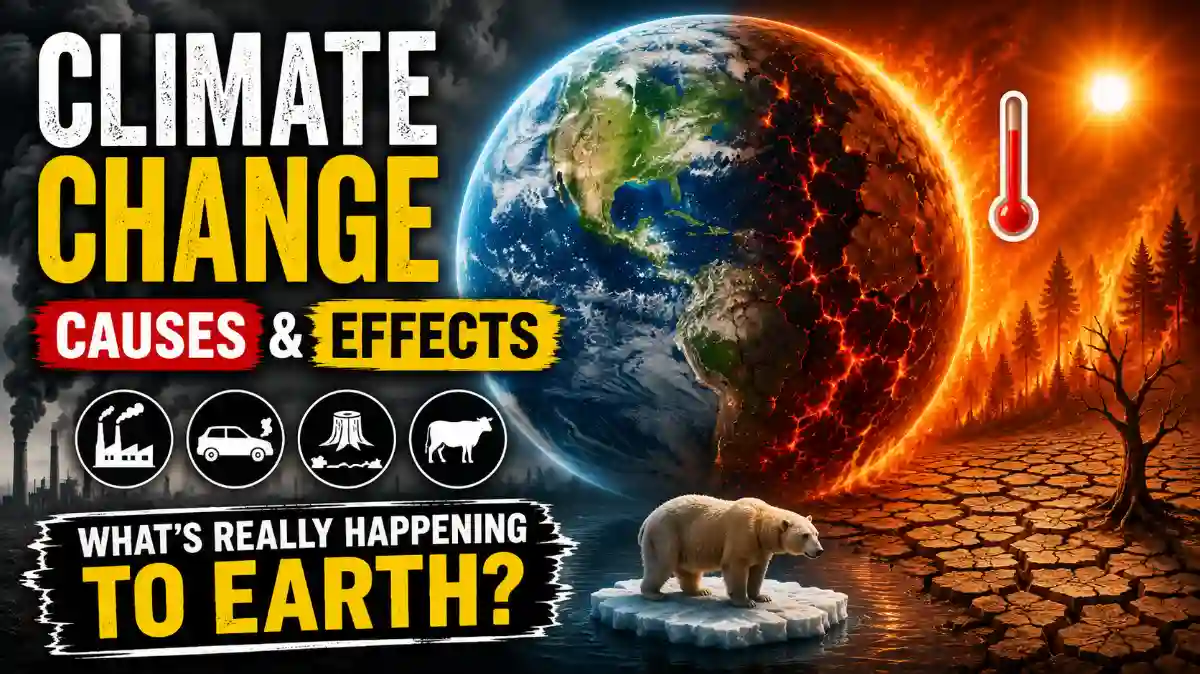
Climate Change Causes Climate change is one of the most pressing challenges of our time. It refers to long-term shifts in temperature, precipitation patterns, and other atmospheric conditions on Earth. While the planet’s climate has changed naturally over millennia, human activities have dramatically accelerated these changes since the Industrial Revolution. Understanding the causes and effects of climate change is essential for every global citizen who wants to protect our shared home.
What is Climate Change Causes?
Climate change is not just about warmer days. It encompasses rising global temperatures, melting ice caps, extreme weather events, shifting ecosystems, and rising sea levels. According to scientific consensus, the Earth’s average temperature has risen by approximately 1.1°C since the late 19th century, with most of this warming occurring in the last few decades. Without urgent action, projections suggest further increases that could push ecosystems and societies to the brink.
Major Causes of Climate Change
1. Greenhouse Gas Emissions from Fossil Fuels
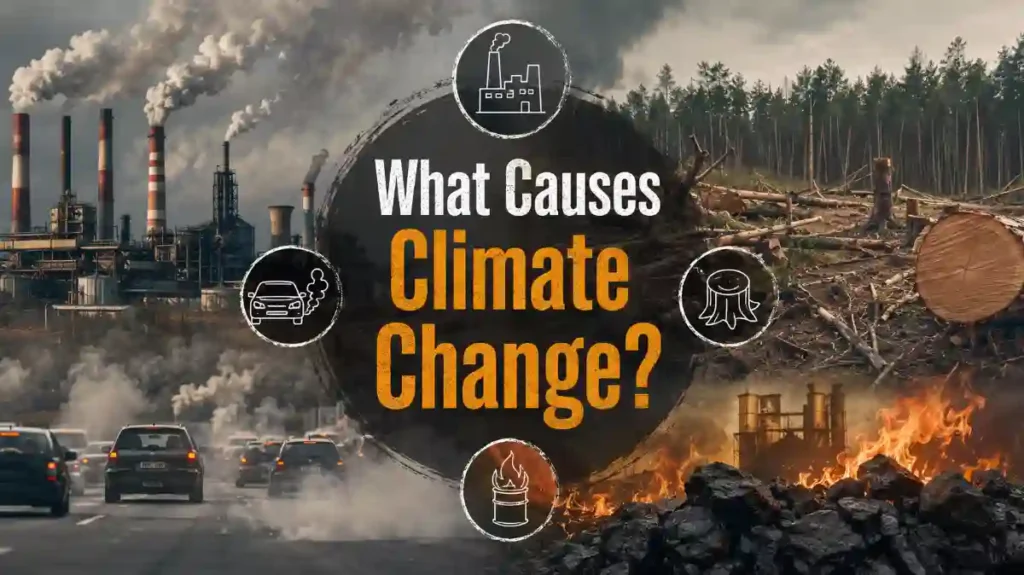
The burning of coal, oil, and natural gas for energy, transportation, and industry releases massive amounts of carbon dioxide (CO₂) and methane (CH₄) into the atmosphere. These gases trap heat, creating a “greenhouse effect” that warms the planet.
Power plants, vehicles, and factories are primary culprits. Road transport alone accounts for a significant portion of global emissions. As developing economies grow and populations increase, energy demand continues to rise, intensifying this effect.
2. Deforestation and Land-Use Changes
Forests act as natural carbon sinks, absorbing CO₂ through photosynthesis. However, large-scale deforestation for agriculture, logging, and urban development reduces this capacity. When trees are cut down and burned or left to decay, they release stored carbon back into the atmosphere.
Tropical rainforests in the Amazon, Southeast Asia, and Central Africa are particularly critical. Their loss not only adds greenhouse gases but also disrupts local and global weather patterns.
3. Agriculture and Livestock
Modern agriculture contributes through methane emissions from livestock (especially cattle), nitrous oxide from fertilizers, and CO₂ from machinery and land clearing. Rice paddies in flooded fields are also significant methane sources.
While feeding the world’s growing population is necessary, unsustainable farming practices amplify climate impacts.
4. Industrial Processes and Waste
Cement production, chemical manufacturing, and other heavy industries release potent greenhouse gases. Landfills and waste management produce methane as organic waste decomposes. Fluorinated gases used in refrigeration and air conditioning are far more powerful than CO₂, though emitted in smaller quantities.
5. Natural Factors (with Human Amplification)
Volcanic eruptions, solar variations, and orbital changes have influenced climate historically. Today, however, human activities dominate. Feedback loops—such as melting permafrost releasing trapped methane or shrinking ice reducing the planet’s reflectivity (albedo effect)—further accelerate warming.
Devastating Effects of Climate Change
Rising Temperatures and Extreme Weather
Heatwaves are becoming more frequent, intense, and deadly. Regions that once experienced rare extreme heat now face prolonged scorching periods. This leads to:
- Increased wildfires (as seen in Australia, California, and the Mediterranean)
- Stronger hurricanes and typhoons with higher rainfall
- Unpredictable flooding and prolonged droughts
Melting Ice and Rising Sea Levels
Polar ice sheets and glaciers are shrinking rapidly. Greenland and Antarctica are losing ice at accelerating rates. This contributes to sea level rise, threatening coastal cities and low-lying islands. Millions of people in places like Bangladesh, the Maldives, and Pacific island nations face displacement—creating “climate refugees.”
Impacts on Ecosystems and Biodiversity
Coral reefs are bleaching and dying due to warmer oceans and acidification. Species are migrating toward poles or higher altitudes, disrupting food chains. Many plants and animals cannot adapt quickly enough, leading to extinctions. The loss of biodiversity weakens ecosystems’ ability to provide services like clean water, pollination, and carbon storage.
Threats to Human Health and Food Security
Climate change affects health through:
- Heat-related illnesses and deaths
- Spread of vector-borne diseases (malaria, dengue) into new regions
- Reduced air quality from wildfires and pollution
- Malnutrition due to crop failures staple crops like wheat, maize, and rice face yield declines in many tropical and subtropical areas. Water scarcity is worsening conflicts and migration in vulnerable regions.
Economic and Social Consequences
Extreme weather damages infrastructure, disrupts supply chains, and burdens economies—especially in developing countries with limited resources. Insurance costs are rising, and entire industries (tourism, fisheries, agriculture) are at risk. Inequality grows as poorer communities suffer the most despite contributing the least to emissions.
The Interconnected Global Reality
Climate change knows no borders. Emissions in one country affect the entire planet. A farmer in Maharashtra, India, a fisherman in Indonesia, and a resident of coastal Florida all experience its consequences. This global challenge demands global cooperation.
Hope Through Action: What Can Be Done?
While the situation is urgent, solutions exist:
- Transitioning to renewable energy (solar, wind, hydro)
- Reforestation and sustainable land management
- Adopting climate-smart agriculture
- Improving energy efficiency and reducing waste
- International agreements like the Paris Accord
- Individual actions: reducing consumption, supporting green policies, and spreading awareness
Technological innovations in carbon capture, green hydrogen, and sustainable materials offer promising pathways.
Conclusion: Our Shared Responsibility
Climate change is not a distant threat—it is happening now, reshaping our world in real time. By understanding its causes and effects, we empower ourselves to act. Every policy decision, business choice, and personal habit matters.
The future is not yet written. With collective will, innovation, and solidarity across nations, we can mitigate the worst impacts and build a more resilient, sustainable planet for future generations.
What steps are you taking in your daily life to combat climate change? Share your thoughts in the comments below. Together, our small actions can create a powerful global wave of change.
This article is for educational and awareness purposes. For the latest scientific reports, refer to IPCC assessments and trusted global climate organizations.